Hurricane-Resilient Investing on the Texas Coast
Real Estate Investing, Corpus Christi, Disaster-Resilient Strategy
Hurricane-Resilient Investing on the Texas Coast
Corpus Christi real estate offers rare cash-flow potential and buyer-friendly pricing on the Texas coast, but coastal investors only win when they price in storm risk and build for the next hurricane—not the last one. In this guide, you’ll learn how to structure a disaster-resilient investing strategy that still pencils out—and how Freedom Lending’s hard money and DSCR loans help you execute it.
Why Corpus Christi Still Deserves a Spot in Your Portfolio
On paper, Corpus Christi in late 2026 looks almost boring—and that’s good news for disciplined Texas coastal investors. Median home values hover around the low- to mid-$200,000s, with typical sale prices in the high $260,000s to high $270,000s and plenty of inventory on the market. Multiple data sources, from Zillow and Redfin to the Texas Real Estate Research Center, point to a buyer-leaning, slow-growth environment with 6–7 months of supply and days-on-market stretching past 50 days.
That combination—soft pricing, stable regional demand, and a strong rental base tied to port activity, energy, and the university—creates a lane for investors who are willing to underwrite conservatively and invest in resilience. While short-term appreciation may be flat or slightly negative into 2027, well-bought, well-insured, and well-rehabbed properties in Corpus Christi can still deliver steady cash flow and long-term durability.
📌 Key Takeaway: Corpus Christi isn’t a speculation play—it’s a cash-flow and durability market where resilient design and smart financing separate the pros from the tourists.
1. Windstorm Insurance: Non-Negotiable on the Coast
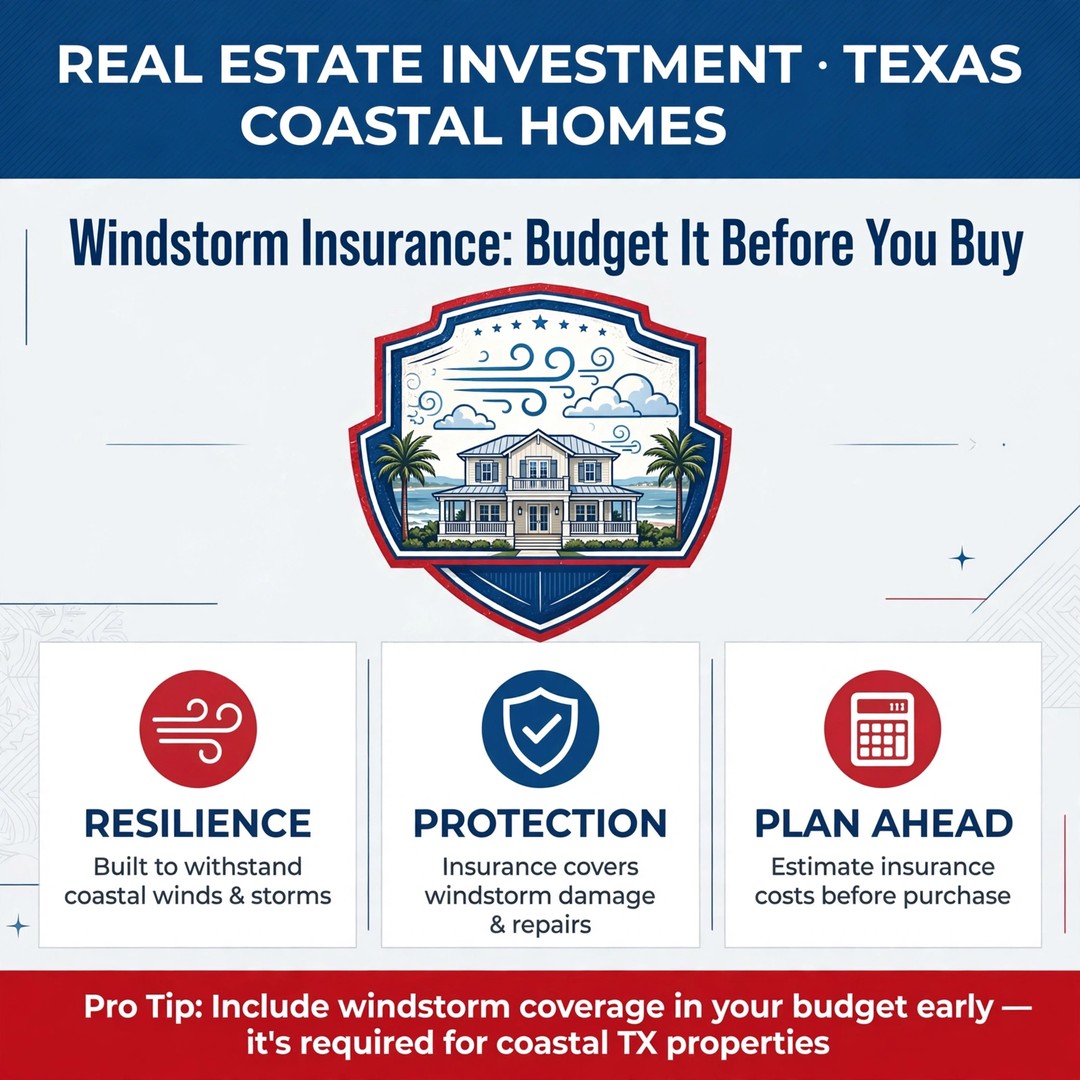
Along the Texas coast, standard homeowners policies typically exclude wind and hail damage from hurricanes. That’s where windstorm coverage—often through the Texas Windstorm Insurance Association (TWIA)—comes in. As of mid‑2026, the average TWIA residential windstorm premium is roughly $2,500–$2,800 per year, and rates have held flat for 2026 and 2027 according to TWIA filings and independent analyses. In other words, wind coverage is expensive, but at least it’s predictable in the near term.
Smart investors in Corpus Christi don’t treat windstorm insurance as an afterthought; they bake it into the deal from day one. That means:
Getting quotes for both TWIA and private carriers before you offer, especially on newer or fortified homes that may qualify for better private rates.
Structuring deals so the debt-service coverage ratio (DSCR) still works after you plug in realistic wind, hazard, and flood premiums—not optimistic guesses.
Capturing mitigation credits by ensuring roofs, windows, and connections meet or exceed current wind codes and are properly documented with your carrier.
💡 Pro Tip: Ask your insurance agent which specific construction upgrades will directly reduce your windstorm premium—such as roof decking, clips, or impact glass—then build those into your rehab scope and budget from day one.
“On the Texas coast, windstorm insurance isn’t a line item to squeeze—it’s a core operating expense that can make or break your DSCR.”
2. Elevation and Flood-Zone Diligence: Read the Maps, Not Just the MLS
Flood risk in Corpus Christi is highly parcel-specific. Two homes on the same street can have very different requirements and insurance costs depending on their FEMA flood zone and elevation. The City has adopted updated Flood Insurance Rate Maps and enforces strict rules in Special Flood Hazard Areas (SFHAs), especially in coastal V‑zones and riverine A‑zones.
Before you go under contract, your diligence should include:
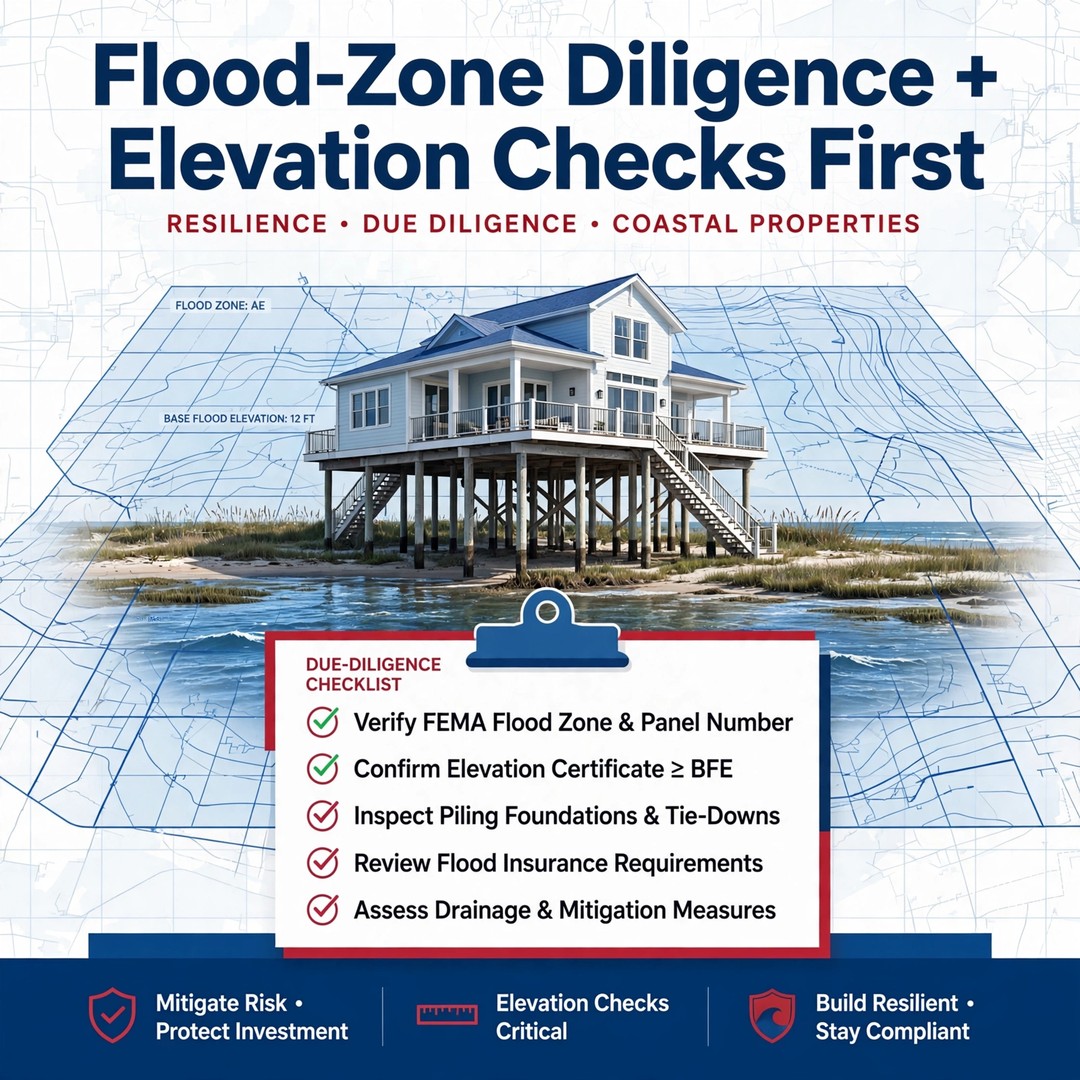
Pulling the property’s FEMA flood zone and Base Flood Elevation (BFE), and confirming whether it sits in an AE or VE zone, or outside the SFHA altogether.
Reviewing any existing Elevation Certificate and, if none exists, budgeting to obtain one so you can accurately estimate National Flood Insurance Program (NFIP) premiums and compliance costs.
Understanding that substantial improvements or damage—repairs equal to or exceeding 50% of pre‑damage market value—can trigger requirements to elevate the structure to BFE plus freeboard, especially in AE and VE zones.
In AE zones, fill and vented garages below BFE can be allowed; in VE zones, fill is prohibited and homes must be on pilings with breakaway walls below the flood line. Those differences dramatically affect rehab budgets, holding timelines, and ultimately your returns—so they must be priced in up front if you’re serious about hurricane-resilient investing on the Texas coast.
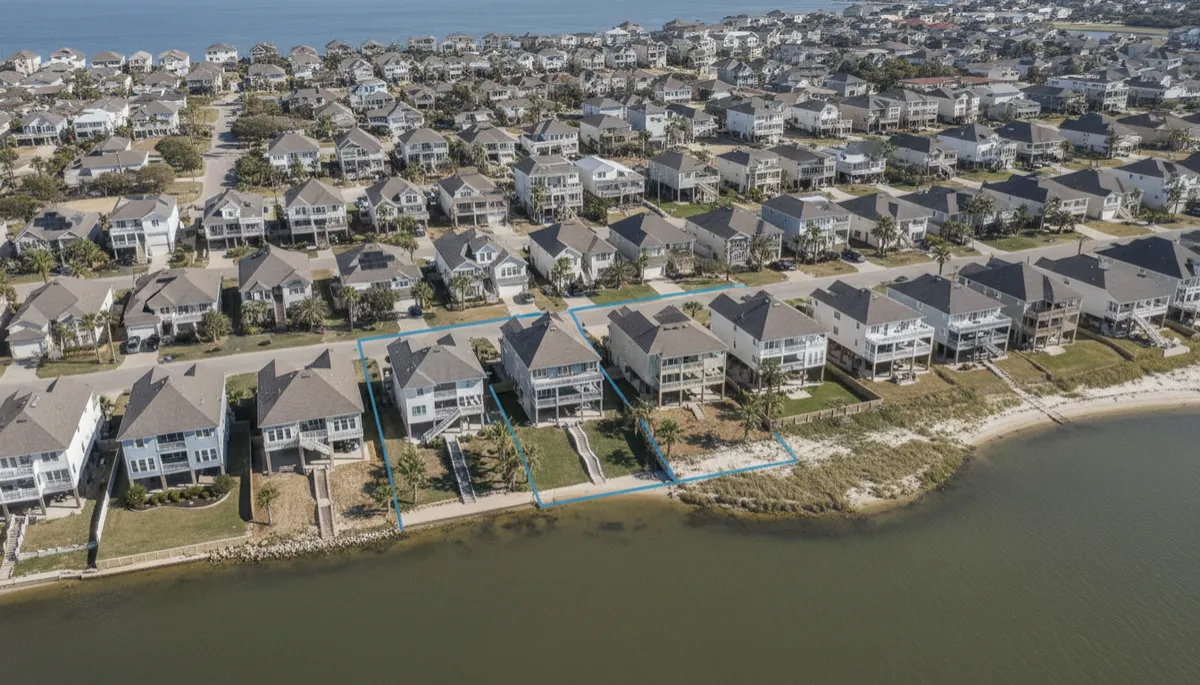
Elevation and flood-zone diligence often make the difference between a risky flip and a resilient long-term hold.
💡 Pro Tip: Don’t rely on the MLS “floodplain” checkbox. Pull FEMA maps yourself, talk with a local engineer, and have your insurance agent model NFIP premiums at different elevations.
3. Resilient Rehab Specs: Build for the Next Landfall
In a coastal market, “lipstick on a pig” rehabs are a liability. Disaster-resilient investing means your scope of work is as much about mitigation as it is about finishes. The goal: reduce damage, reduce downtime, and keep rent checks coming even after a major storm.
Roof and envelope: Upgrade to impact-resistant shingles or metal roofs where appropriate, ensure proper roof decking attachment, and specify hurricane clips/straps at rafter and truss connections. Tighten up soffits and gable ends, which are common failure points in high winds.
Openings: Use impact-rated windows and doors or permanently installed storm shutters. Even if not required, they can reduce both damage and insurance costs while signaling quality to tenants and buyers.
Mechanical systems: Elevate HVAC condensers, electrical panels, and water heaters above expected flood levels where feasible. In lower areas, choose materials and layouts that allow for faster dry‑out and repair.
Interior materials: Favor tile or luxury vinyl plank over carpet in lower areas, use moisture‑resistant drywall where appropriate, and design for easy replacement of baseboards and lower wall sections after shallow flooding.
📌 Key Takeaway: A resilient rehab may cost more up front, but it can mean lower insurance claims, shorter downtime after a storm, and stronger DSCR performance over the life of the loan—especially in hurricane-prone markets like Corpus Christi.
Think of every upgrade as buying back future rent checks: stronger roofs, better openings, and elevated systems all protect your income stream when the Gulf turns active.
4. Why Corpus Christi Still Pencils Out for Prepared Investors
When you factor in windstorm, flood, and resilient construction, Corpus Christi deals can look tight at first glance. But remember the broader context:
Prices are relatively affordable compared with many coastal markets, with median values around the low $200,000s and a clear buyer’s-market tilt in late 2026.
Inventory is elevated, which gives investors room to negotiate, especially on properties that need significant rehab or code updates—ideal candidates for a resilience-focused reposition.
Local economic drivers tied to the port, petrochemicals, and education support steady rental demand, even if appreciation is modest.
Investors who underwrite conservatively—using realistic insurance, maintenance, and vacancy assumptions—can still achieve solid DSCRs and long-term returns. The edge goes to those who embrace storm risk as an engineering and financial problem to solve, not a reason to sit on the sidelines, and who pair that mindset with the right Corpus Christi hard money and DSCR financing.
💡 Pro Tip: Stress-test every deal at higher insurance and tax assumptions, plus a few weeks of vacancy after a storm. If it still pencils, you’re building a truly disaster-resilient portfolio.
5. How Freedom Lending’s Hard Money and DSCR Loans Power This Strategy
Building hurricane-resilient rentals on the Texas coast takes capital—both for acquisition and for the heavier rehab that true mitigation requires. That’s where Freedom Lending comes in. Their loan programs are designed around investors, not owner‑occupants, which gives you flexibility to execute a coastal strategy the right way.
Hard money for value‑add and repositioning: Use short‑term, asset‑based financing to acquire underpriced or storm‑dated properties quickly, then fund structural upgrades, code compliance, and resilient rehab specs without draining your own reserves.
DSCR loans for long‑term holds: Once the property is stabilized—with windstorm and flood coverage in place and rents proven—refinance into a DSCR loan that looks primarily at the property’s cash flow. This structure is ideal for coastal rentals where insurance and taxes are higher but rents can support strong coverage ratios.
Investor‑focused underwriting: Because Freedom Lending understands coastal risk, you can have real conversations about rehab scopes, insurance assumptions, and reserves—rather than trying to fit a hurricane‑exposed property into a cookie‑cutter loan box.
💡 Pro Tip: Map out your entire capital stack—acquisition, rehab, and take‑out DSCR refinance—before you close. Freedom Lending can help you structure that plan around realistic rent, insurance, and vacancy assumptions specific to Corpus Christi and the broader Texas coast.
Putting It All Together—and Your Next Step
Hurricane‑resilient investing on the Texas coast isn’t about chasing the highest pro forma return; it’s about building a portfolio that survives the test of time and weather. In Corpus Christi, that means:
Treating windstorm insurance as a core operating expense and leveraging mitigation to control premiums.
Doing deep elevation and flood‑zone diligence before you ever swing a hammer or submit a permit.
Specifying rehabs that favor structural strength, water management, and rapid recovery over cosmetic quick wins.
Leveraging Freedom Lending’s hard money and DSCR financing to acquire, fortify, and hold properties that can weather the next storm and keep paying you afterward.
If you’re ready to pursue a disaster‑resilient investing strategy in Corpus Christi or elsewhere on the Texas coast, connect with a lender who understands both the risks and the opportunity.
Contact Rob at Freedom Lending to talk through your next coastal deal, run numbers with realistic insurance and rehab assumptions, and explore hard money and DSCR options tailored to your plan:
Email: [email protected]
Phone: 903-806-4400