New Construction Investing Along Austin's Tech Corridor
Real Estate Investing, New Construction, Austin Tech Corridor, Texas Hard Money, DSCR Investor Loans
New Construction Investing Along Austin's Tech Corridor
Austin’s tech corridor, stretching through hubs like North Austin, Round Rock, Leander, and Georgetown, is evolving fast. With prices stabilizing after recent corrections and inventory leaning toward a buyer’s market, savvy Texas real estate investors are turning to new construction as a way to build equity, control costs, and tailor properties to today’s renters and buyers—while pairing projects with hard money and DSCR investor loans for maximum flexibility.
Why New Construction Still Works in a Cooling Austin Market
After the pandemic boom, Austin’s housing market has cooled and normalized. Median prices in the metro hover in the mid-$400,000s, with many city listings above $500,000 and days on market stretching well past two months. That shift has given investors more negotiating power on land and lots, even as long-term fundamentals remain strong thanks to population growth, tech jobs, and large-scale projects like Pearson Ranch and the St. John Site.
For Texas real estate investors, this combination—buyer leverage today with solid demand drivers tomorrow—creates a compelling window for ground-up construction. Instead of chasing bidding wars on existing homes, you can design the product, control the finishes, and target the tenant or buyer profile that best fits your strategy along the Austin tech corridor. When paired with the right hard money construction loan and exit strategy into a DSCR investor loan, this approach can offer both speed and long-term wealth building.
📌 Key Takeaway: A normalized Austin market with strong tech-driven demand is ideal for investors who can control their product through new construction and smart financing.
Lot Sourcing: Where Austin Ground-Up Deals Begin
Every successful new build starts with the dirt. Along Austin’s tech corridor, investors are hunting for infill lots near established employment centers, as well as small subdivisions in fast-growing suburbs like Leander, Round Rock, and Georgetown. With more listings sitting on the market and a notable percentage failing to sell, motivated landowners are increasingly open to negotiation, creative terms, or quick closings—especially when backed by fast Texas hard money loans.
MLS and off-market leads: Expired listings, price-reduced lots, and pocket listings from local agents often hide the best spreads for real estate investor loans.
Targeted mail and local networking: Reaching out directly to longtime landowners near tech campuses, planned transit lines, or major roadway improvements can surface opportunities before they hit the open market.
Entitled land in master-planned communities: Projects like Pearson Ranch show how mixed-use, tech-adjacent communities are being built out in phases. Buying finished lots in these areas can shorten timelines and reduce entitlement risk.
💡 Pro Tip: When evaluating a lot, underwrite both today’s comps and tomorrow’s potential—especially where new transit, highway expansions, or large employers are planned. Having a hard money lender ready can also strengthen your offer with quick closes.
Builder Partnerships: Your Execution Edge in Central Texas
The right builder can make or break a new construction investment. In Austin’s tech corridor, investors are pairing with small to mid-sized local builders who understand city and county permitting, have relationships with inspectors, and know how to design for today’s renters and buyers—think home offices, EV-ready garages, and energy-efficient systems that appeal to tech workers and long-term tenants.
Fixed-bid vs. cost-plus contracts: Fixed-bid contracts offer cost certainty but may be priced higher. Cost-plus can save money in stable material markets but requires tight oversight and a trusted partner.
Standardized plans: Reusing proven floor plans across multiple lots reduces design time, streamlines permitting, and makes construction draws more predictable—especially when working with hard money construction draws.
Volume relationships: When you can bring repeat projects, builders may sharpen pricing or prioritize your timelines, giving you a competitive advantage.
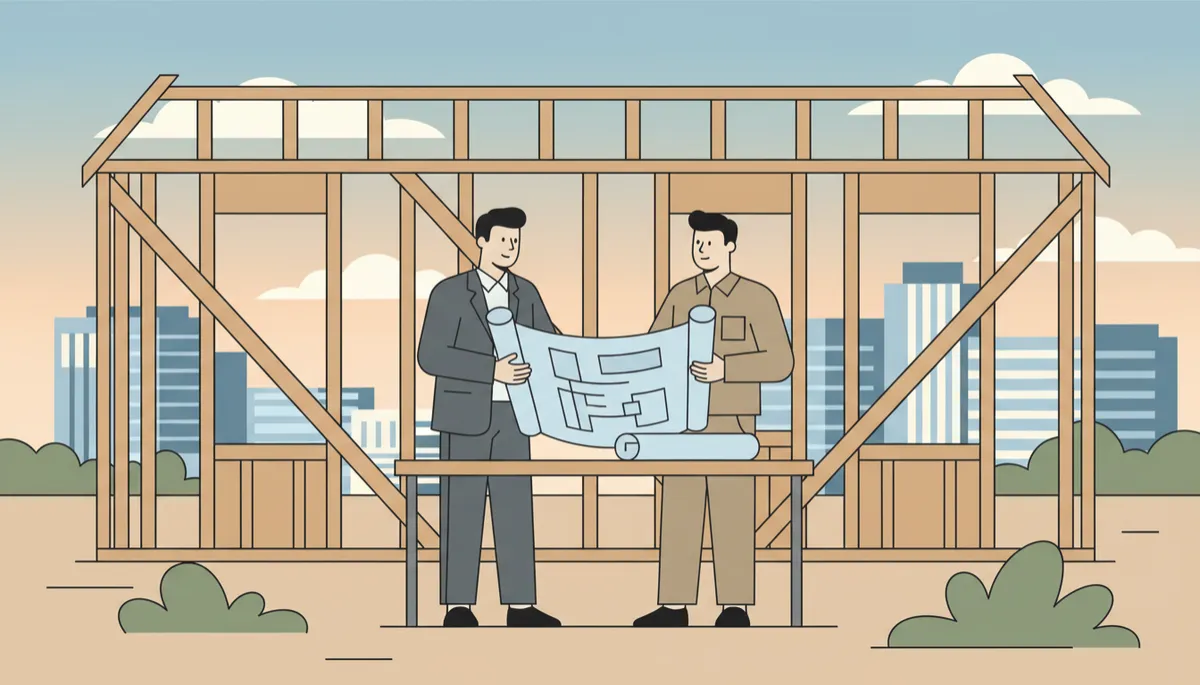
Strong builder partnerships help investors control costs and keep projects on schedule with Texas hard money financing.
Construction Timelines: Planning from Dirt to Door Keys
In the Austin metro, a realistic ground-up timeline for a single-family or small multifamily project often runs 12–18 months, depending on jurisdiction and complexity. Investors should break this into distinct phases and align real estate investor loans and capital accordingly:
Pre-acquisition and due diligence (30–60 days): Feasibility, zoning checks, utilities, soil reports, and preliminary budgets.
Design and permitting (3–6 months): Plans, engineering, and city or county approvals—often the most underestimated part of the schedule.
Vertical construction (6–10 months): From foundation to finishes, with inspections at key milestones tied to lender draws from your Texas hard money construction lender.
Stabilization or sale (1–3 months): Lease-up for rentals or marketing and closing for retail sales, often followed by a refinance into a DSCR loan.
Building in float for permitting delays, weather, and supply chain hiccups is critical. Your financing structure must give you enough runway to complete and either refinance into long-term debt or exit via sale. Matching your hard money term to the true construction timeline—and planning your DSCR refinance early—reduces risk.
How Investors Underwrite Ground-Up Projects in Austin
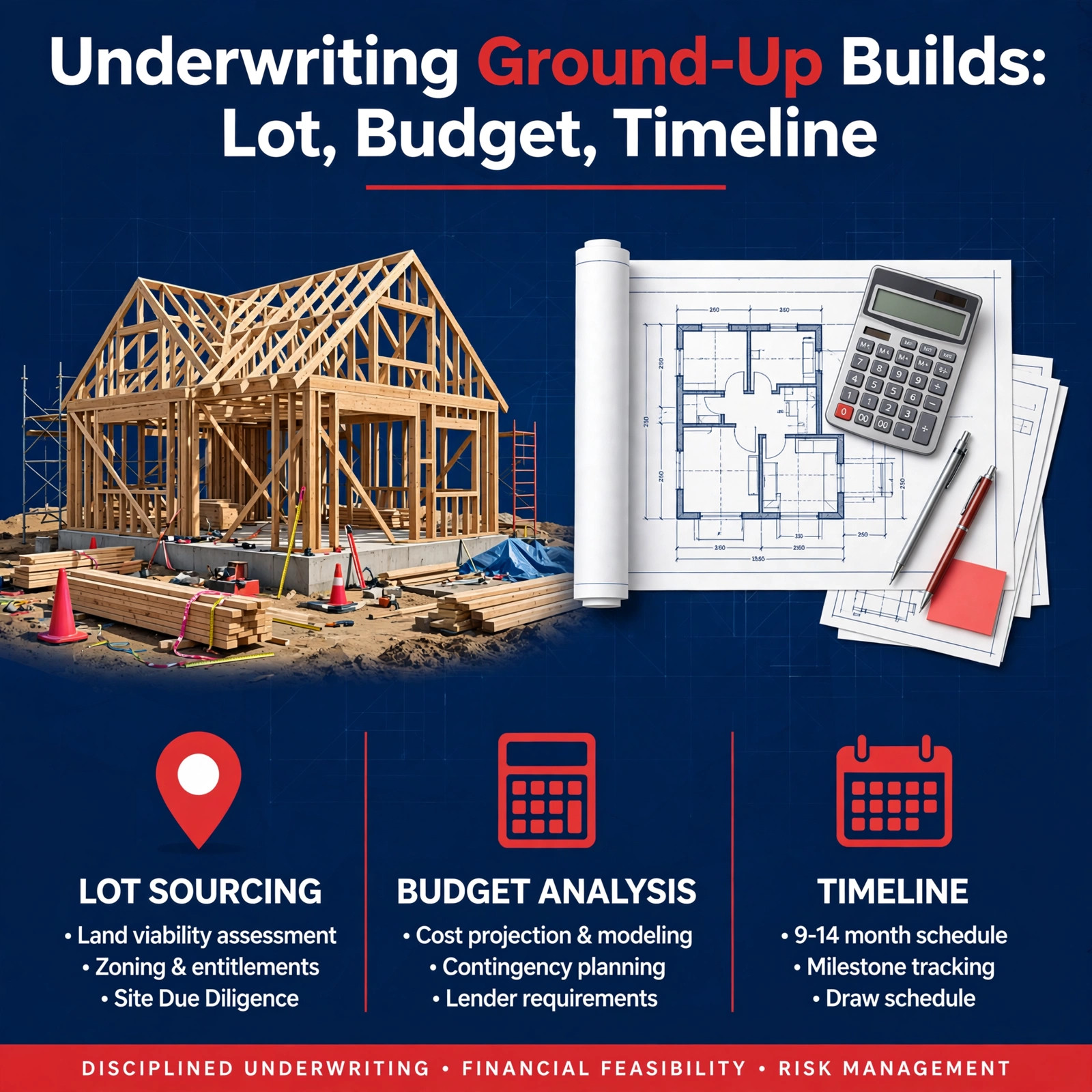
Underwriting new construction in Austin’s tech corridor is about more than just build cost. Investors start with the end in mind: What will this property rent or sell for when it’s complete, given today’s softer but stabilizing Texas market and the terms available from real estate investor lenders?
Exit value: Compare to recent sales and rents for similar new builds, adjusting for location, amenities, and proximity to major employers and transit projects like Project Connect expansions.
Total project cost: Land, soft costs, permits, construction, interest carry, and contingency. Many investors add 5–10% for surprises when using hard money construction loans.
Profit and risk buffer: A common target is 15–25% margin on total cost, with room for modest price or rent dips in case the market slows further.
For build-to-rent projects, investors also model cash flow under conservative rent assumptions, stress-testing vacancy and maintenance. As Austin becomes more balanced, underwriting discipline—rather than rosy appreciation assumptions—is what separates strong deals from marginal ones and makes it easier to qualify for competitive DSCR real estate investor loans.
💡 Pro Tip: Underwrite your DSCR refinance before you ever break ground. If the numbers still work under conservative rents and rates, you’re on stronger footing.
Using Freedom Lending’s Hard Money and DSCR Loans to Execute
Even the best deal on paper fails without the right capital stack. This is where lenders like Freedom Lending become strategic partners for new construction investors in Austin and across Texas along the tech corridor.
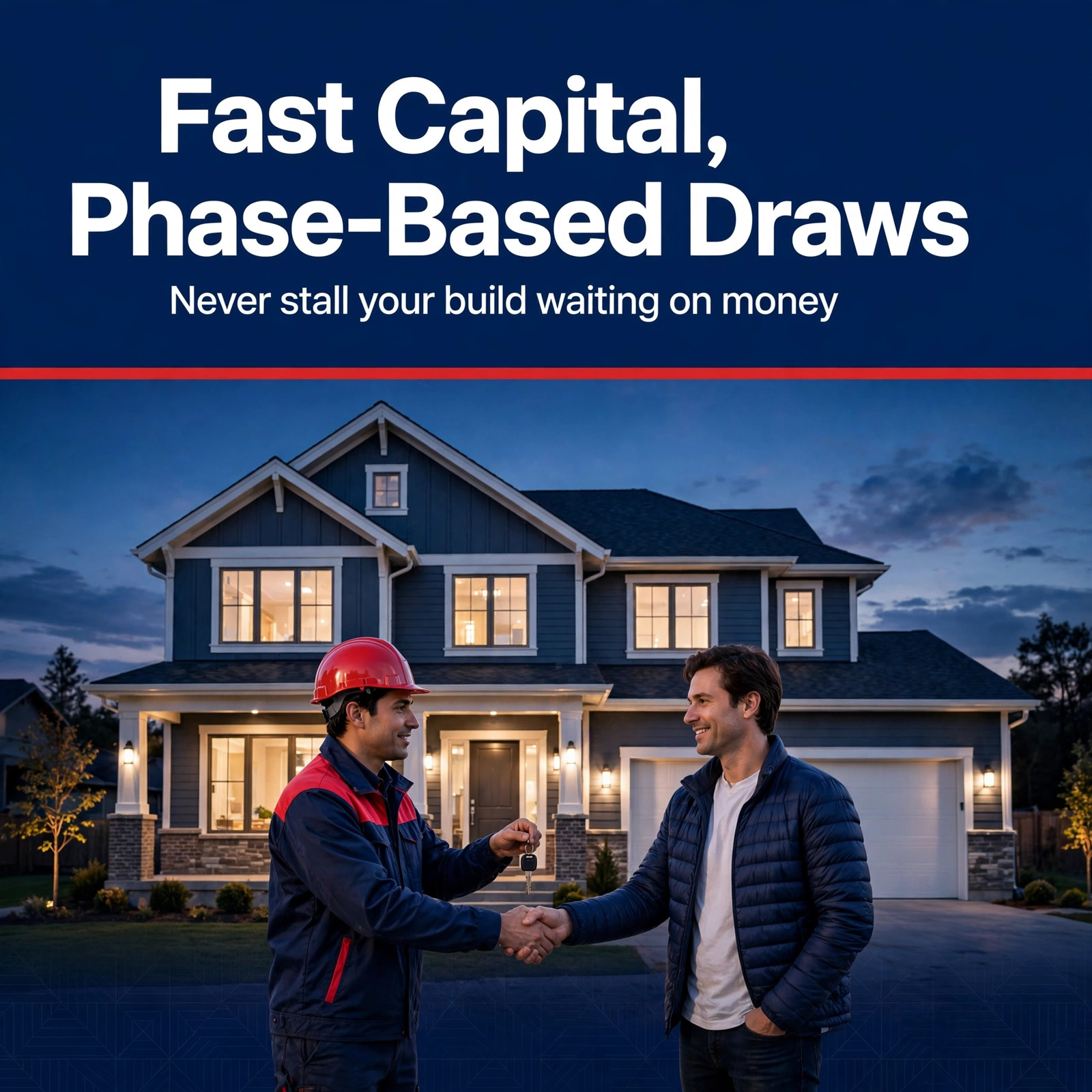
Hard money construction loans are designed for speed and flexibility. Instead of waiting on slow conventional approvals, investors can secure funding for land acquisition and construction, with draws released as milestones are met. These loans are typically short-term and asset-based, allowing you to act quickly on attractive lots, lock in builder relationships, and move projects forward while others are still assembling financing.
Once the property is built and leased, many investors transition into a DSCR (Debt Service Coverage Ratio) loan. Instead of relying on your personal income, DSCR lenders focus on the property’s cash flow—does the rent comfortably cover the monthly payment? For build-to-rent homes and small multifamily near tech employment centers, this can be an efficient way to hold high-quality assets long term while preserving personal borrowing capacity.
📌 Key Takeaway: A common playbook is to use a Texas hard money loan for the build phase, then refinance into a DSCR real estate investor loan once the property is stabilized, locking in long-term financing and pulling out a portion of your equity.
Ready to Build Along Austin’s Tech Corridor?
Austin’s 2026 market may no longer be the frantic seller’s arena it once was—but that is exactly why disciplined new construction investors are leaning in. With more negotiating room on lots, a deep bench of local builders, and strong long-term demand from tech-driven growth, the corridor offers a rare chance to design and control your inventory instead of overpaying for existing stock—especially when paired with the right hard money and DSCR loan strategy.
If you are exploring ground-up projects anywhere along Austin’s tech corridor and want to understand how hard money and DSCR financing can support your strategy, reach out to Freedom Lending for a conversation tailored to your goals and experience level.
To discuss your next new construction deal, contact Rob at [email protected] or call 903-806-4400.